Infrastructure as Civic Ground, Not Barrier
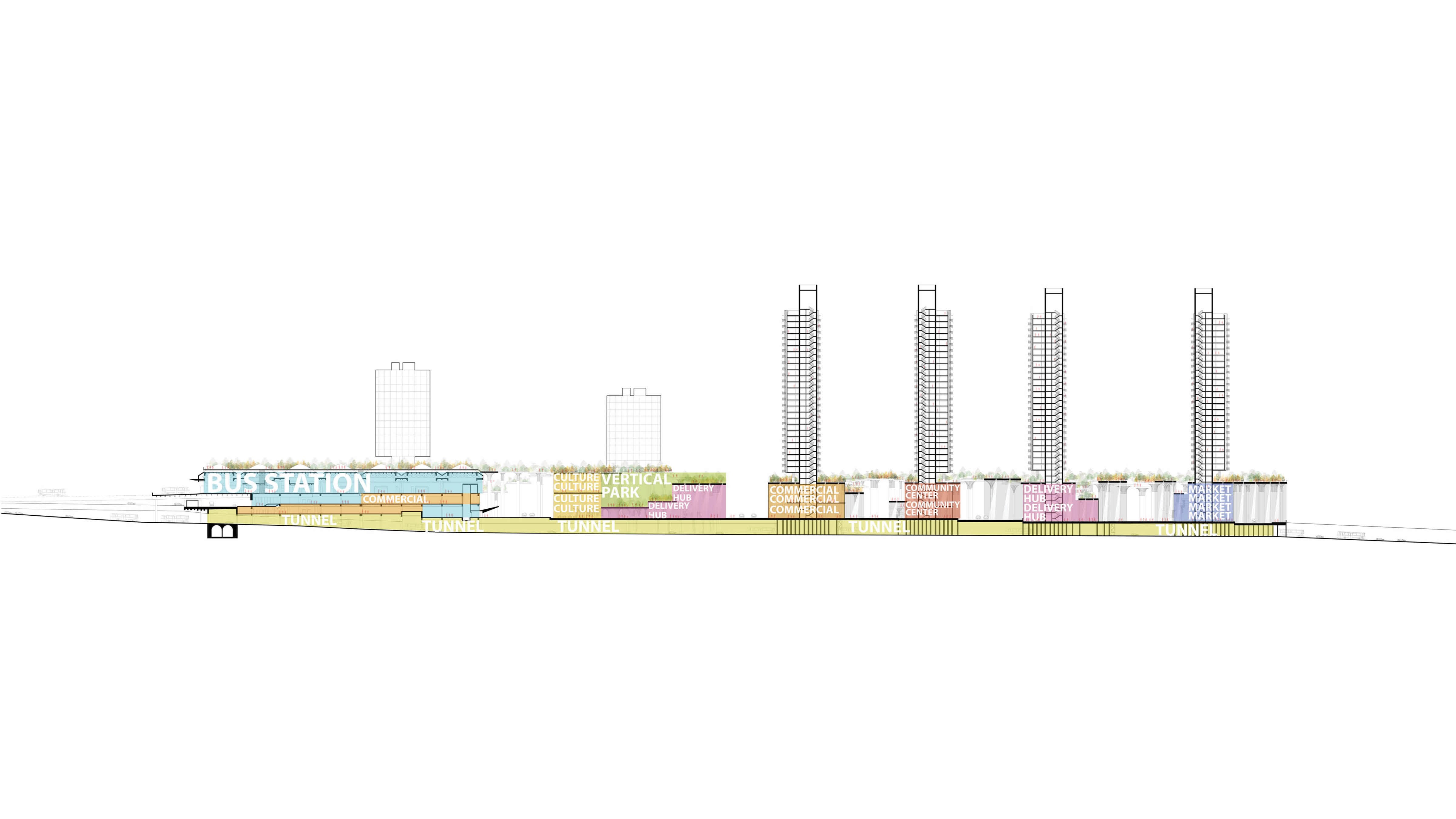
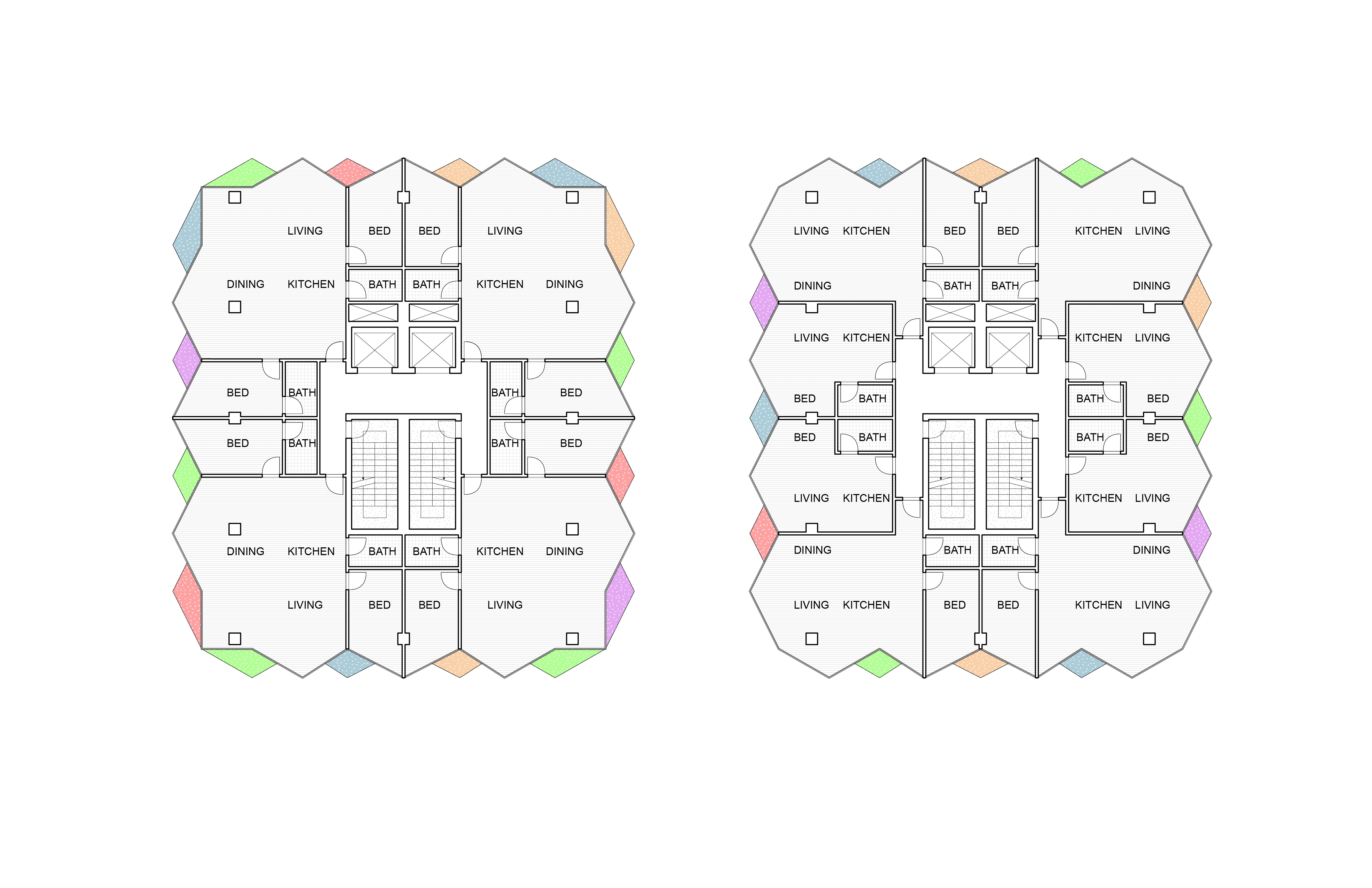
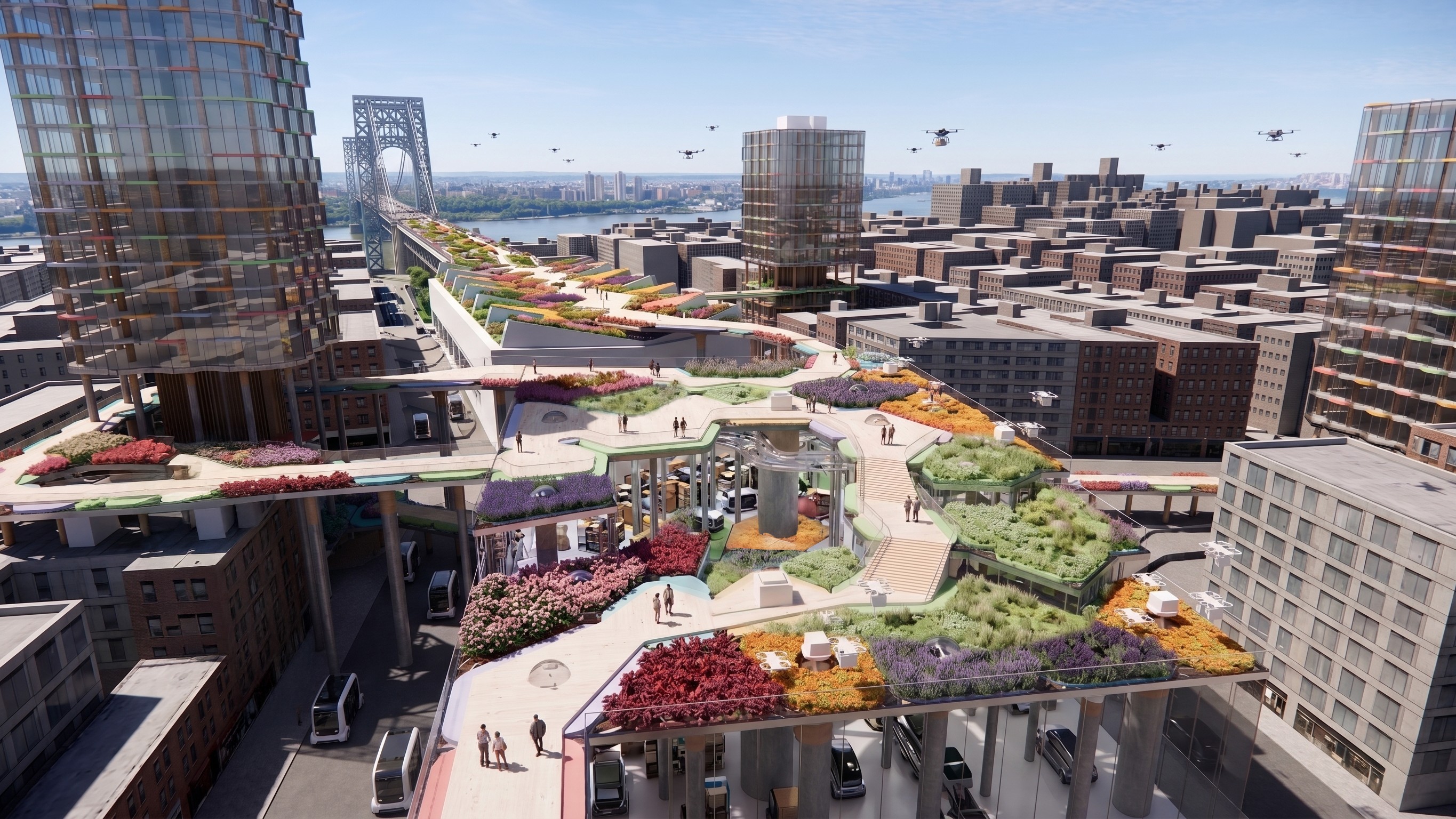
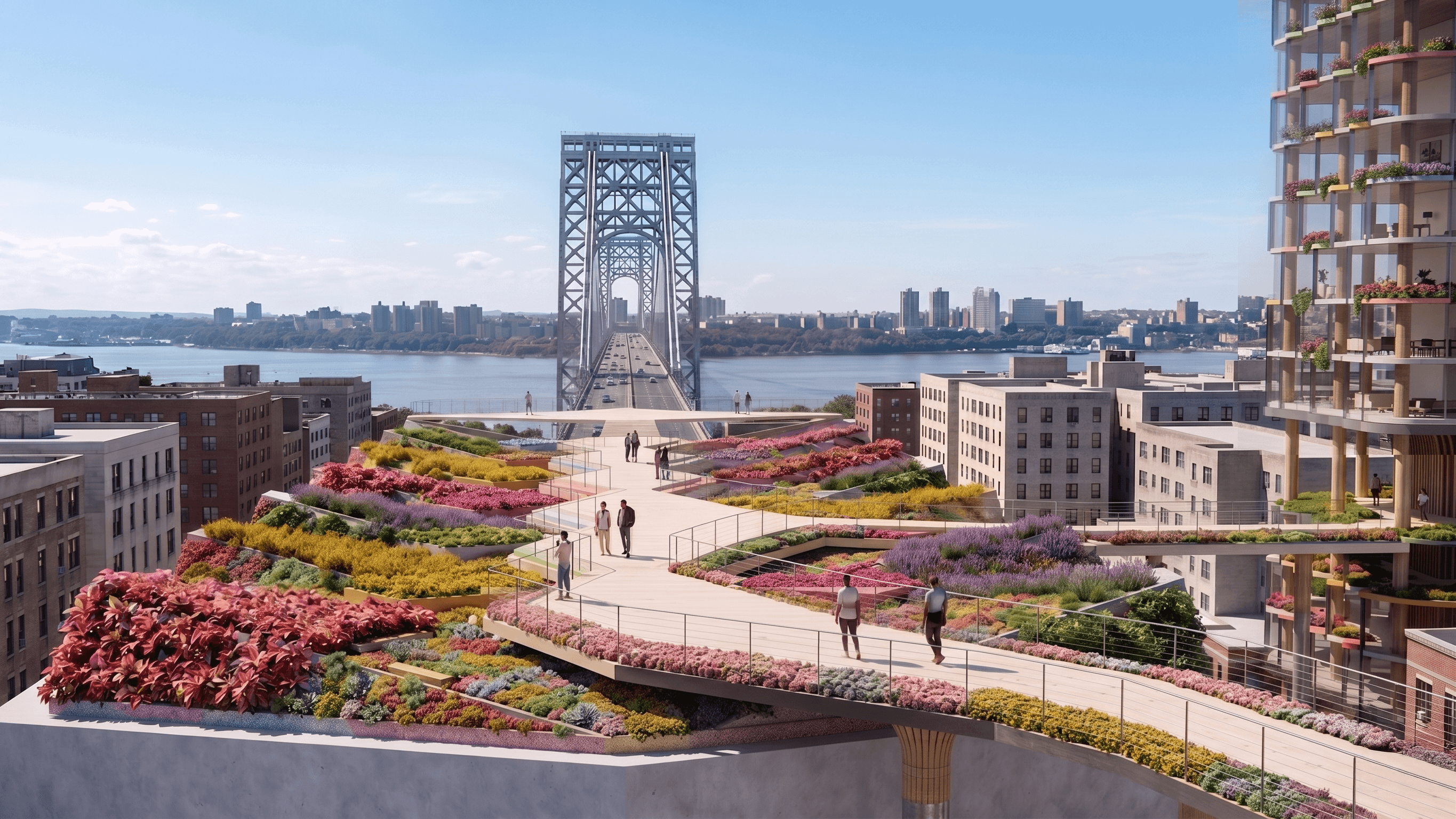
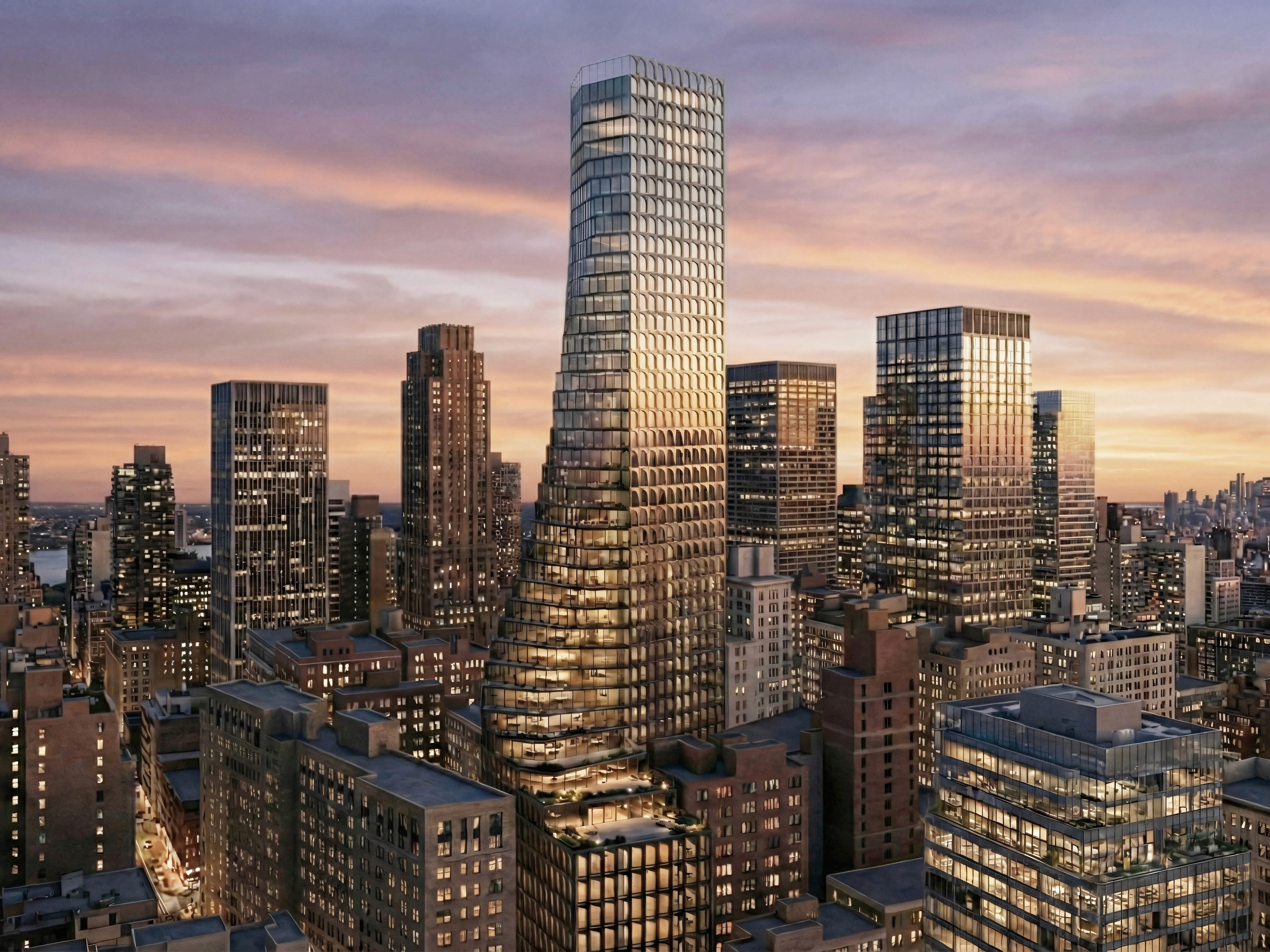
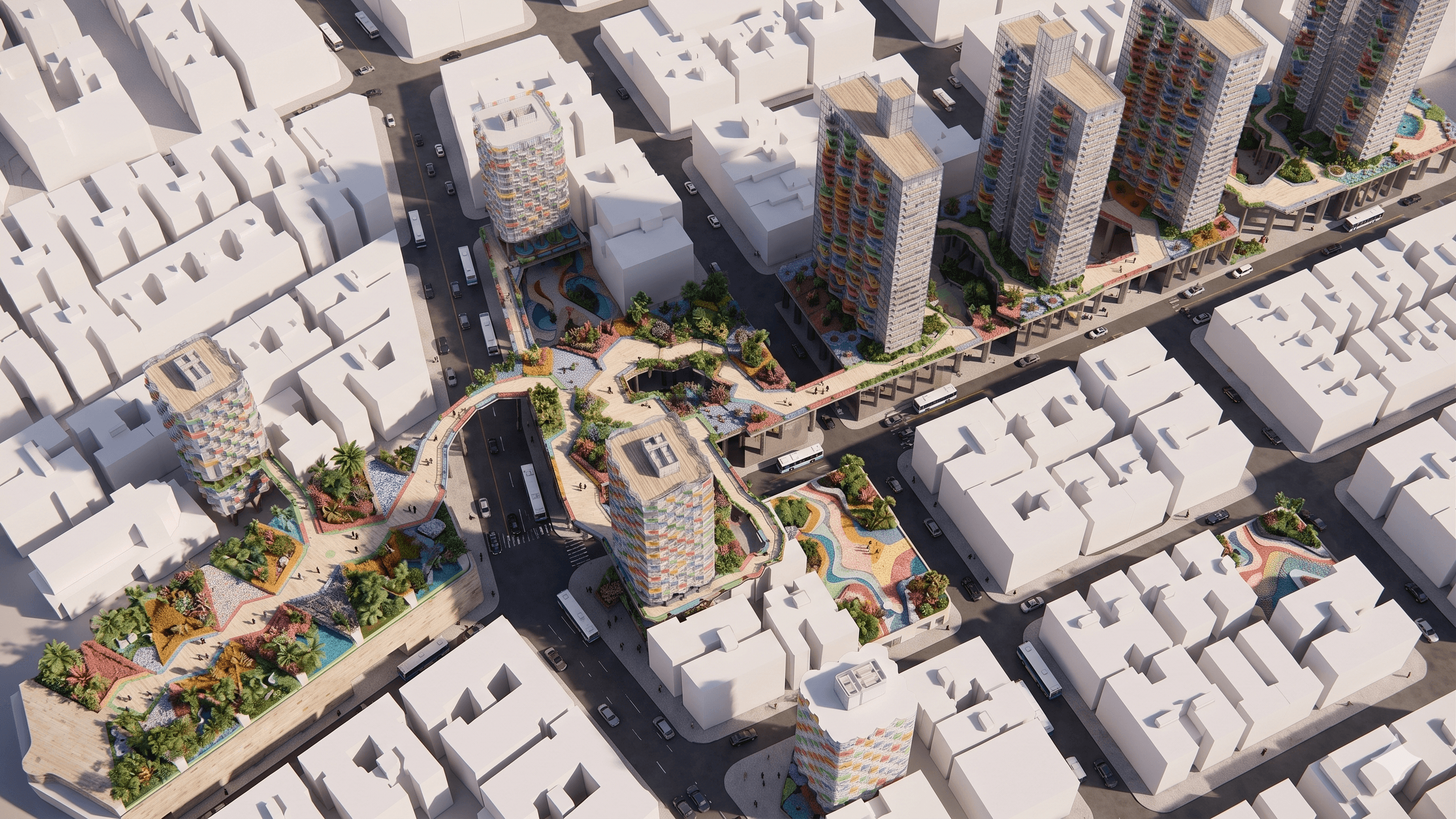
Developed within Galia Solomonoff's Layered Urbanism: GWBBS / ARAUCO Advanced Studio VI, the project transforms the George Washington Bridge Bus Station — Pier Luigi Nervi's 1963 work at the eastern landing of the bridge in Upper Manhattan — and its surrounding infrastructure from a hard urban barrier into an elevated, layered vertical park. The master plan reorganizes pedestrian movement, vehicle traffic, energy flow, logistics, landscape, and housing into interconnected yet distinct vertical strata. A new elevated pedestrian system separates walkers from ground-level traffic and links four new towers with the four existing 32-story Bridge Apartments (1961–64) on the east side, weaving the surrounding communities into one continuous park network across the megastructural field.

Computation Breaks the Inherited City Grid
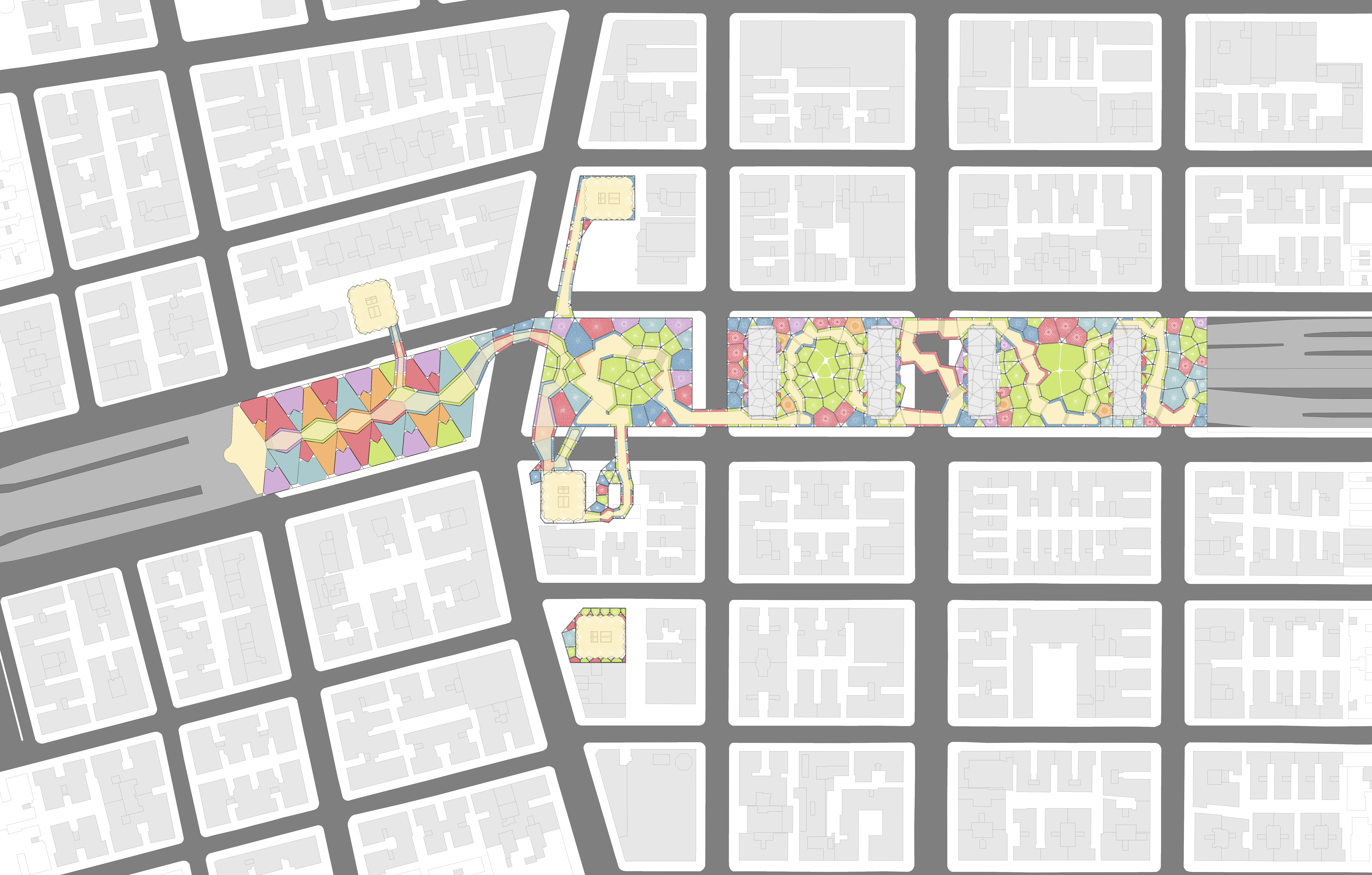
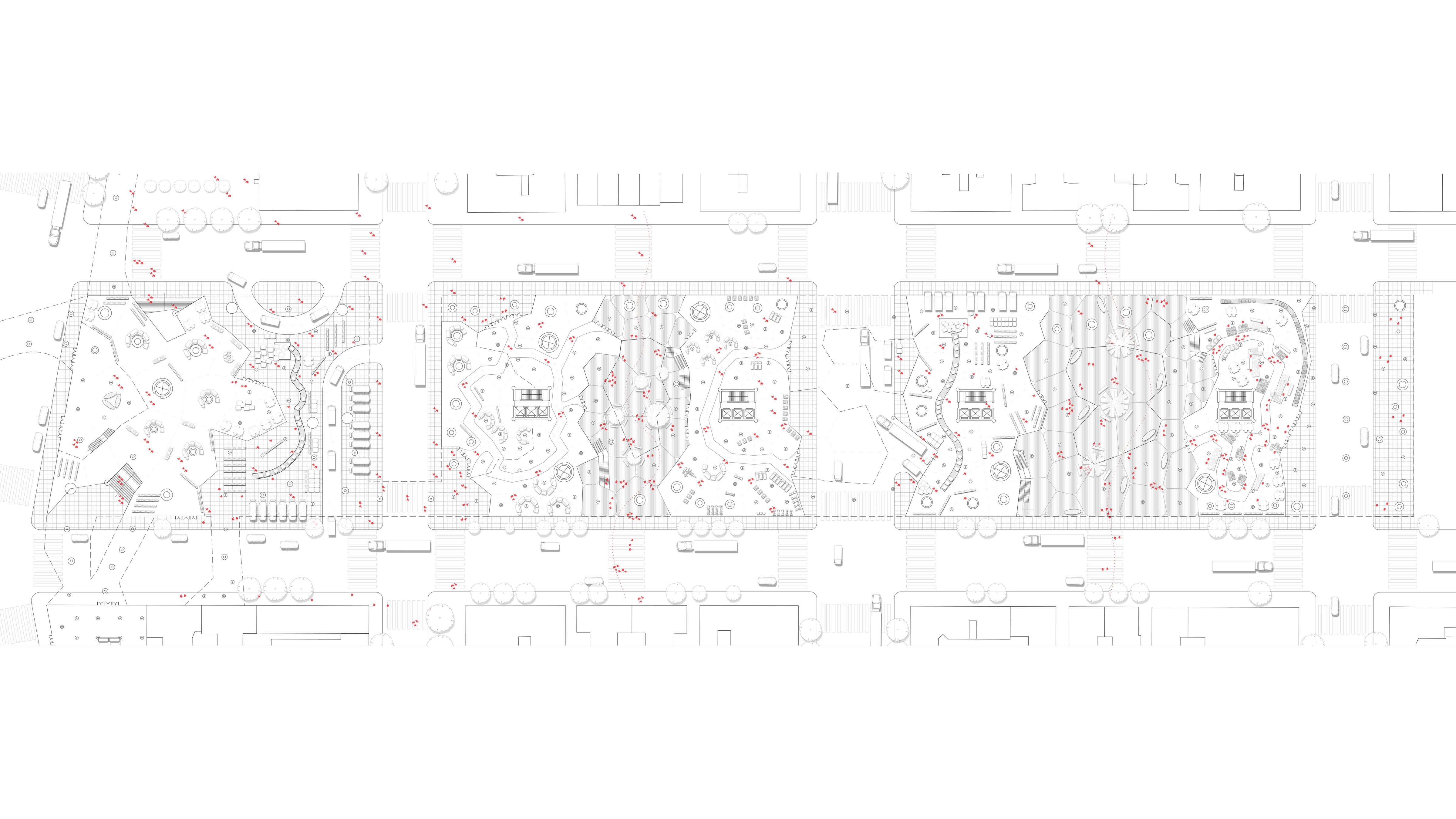
Computation becomes the project's spatial engine, allowing it to move beyond the inherited city grid. A conventional structural raster would impose a rigid orthogonal order on the site, repeating identical bays regardless of the forces, programs, and infrastructures above or below. This project rejects that default condition. Structural points are pulled off the grid and redistributed through three design decisions: creating entrances into the vertical park, aligning with the existing tower structures, and coordinating with the tunnel's lane divisions below to reduce traffic disruption. From these points, a Voronoi system generates cells, platforms, columns, and landscape zones, all coordinated through a unified data-management system in which every element is indexed and parameterized, allowing changes to propagate consistently across scales.

Topography Written as Script
The new ground rises and falls. Platforms shift in height and are connected by walkways, forming a continuous vertical park that climbs from the street to the upper terraces. The automated modeling script generates the platform geometry directly from the indexed point system. By controlling height, function, and structural support for each platform within one script, the project allows the entire landscape topography to be rebuilt automatically whenever a parameter changes, keeping the geometry constructible and the master plan open to iteration.
The Column Carries More Than Load
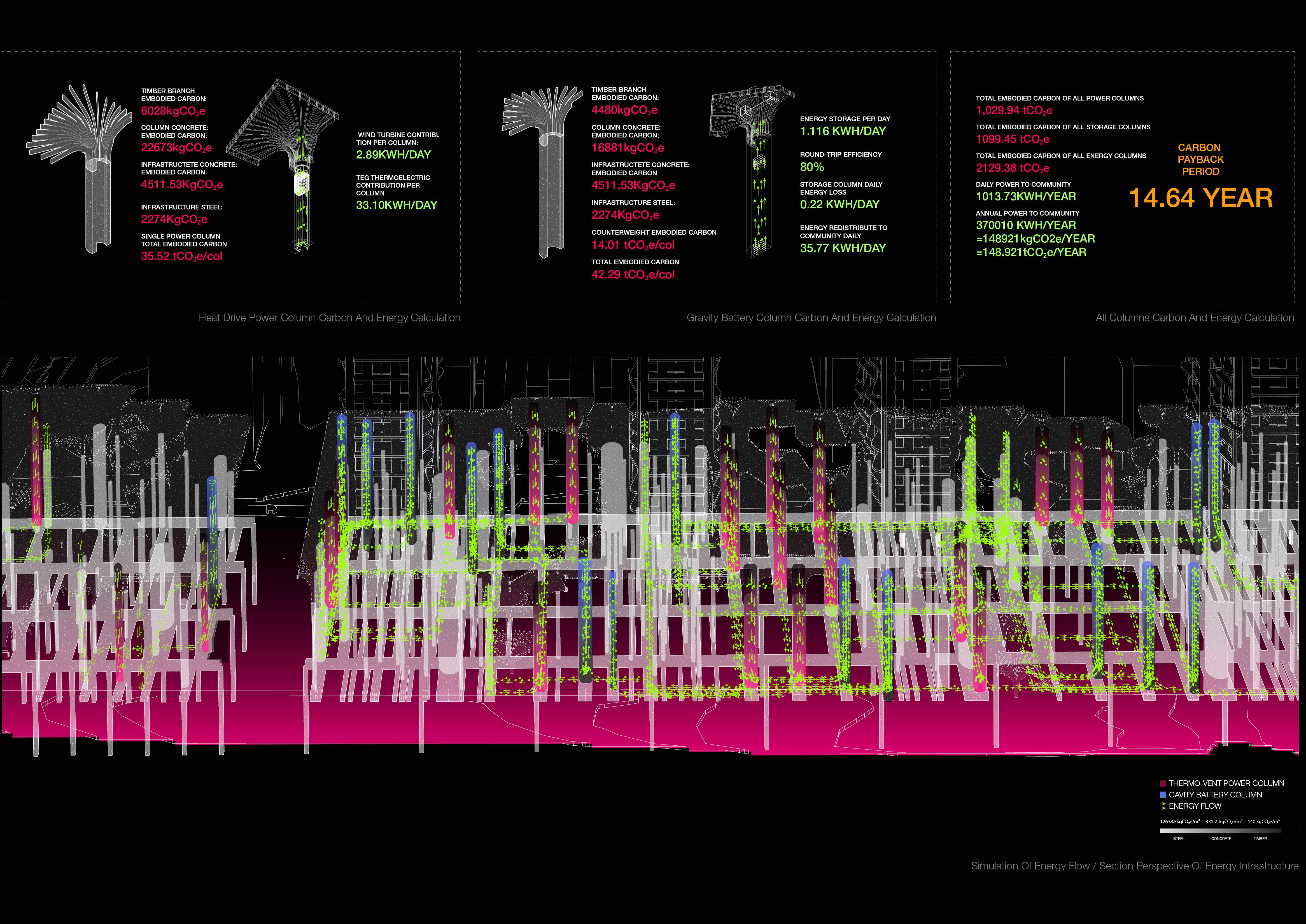
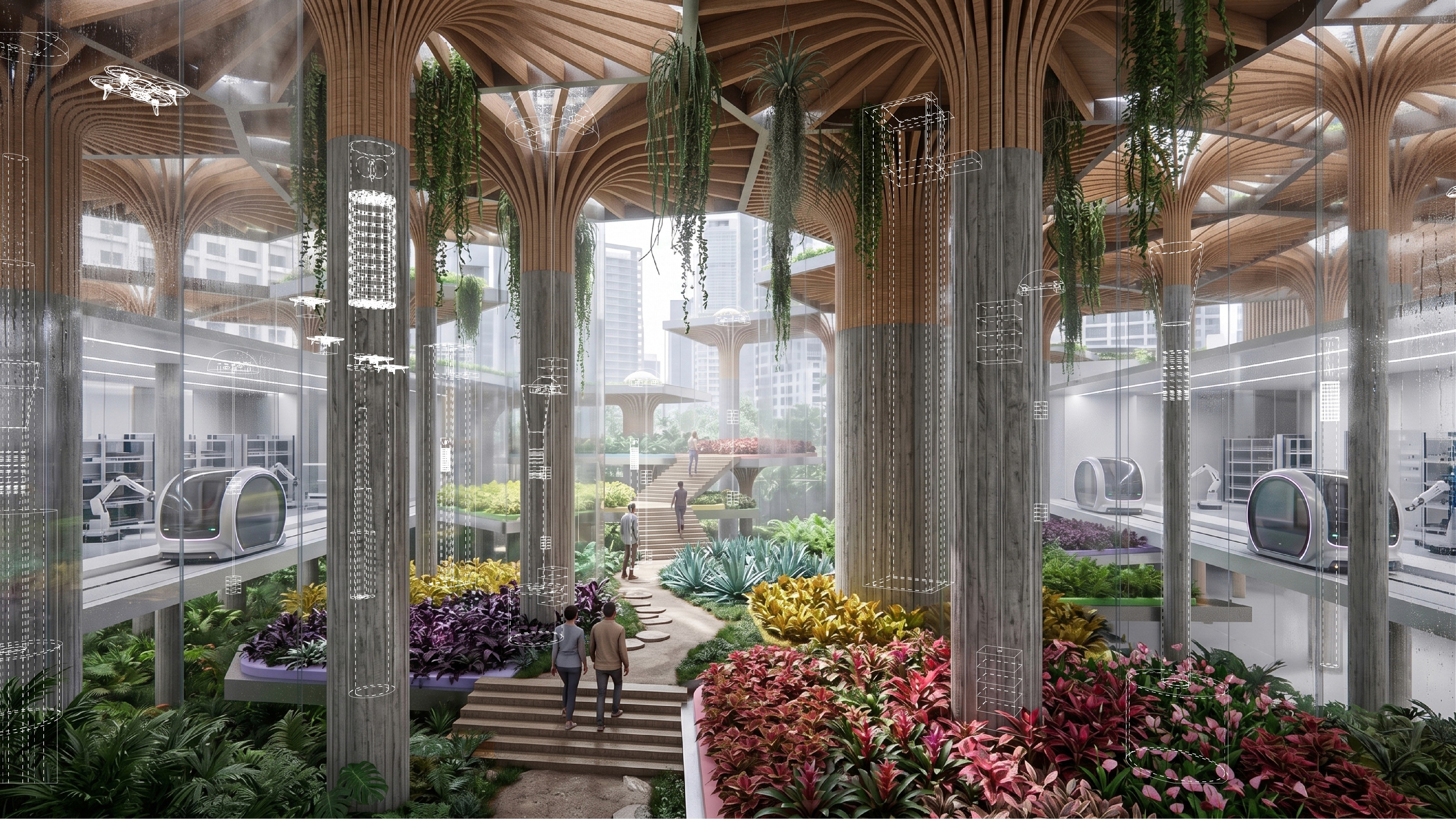
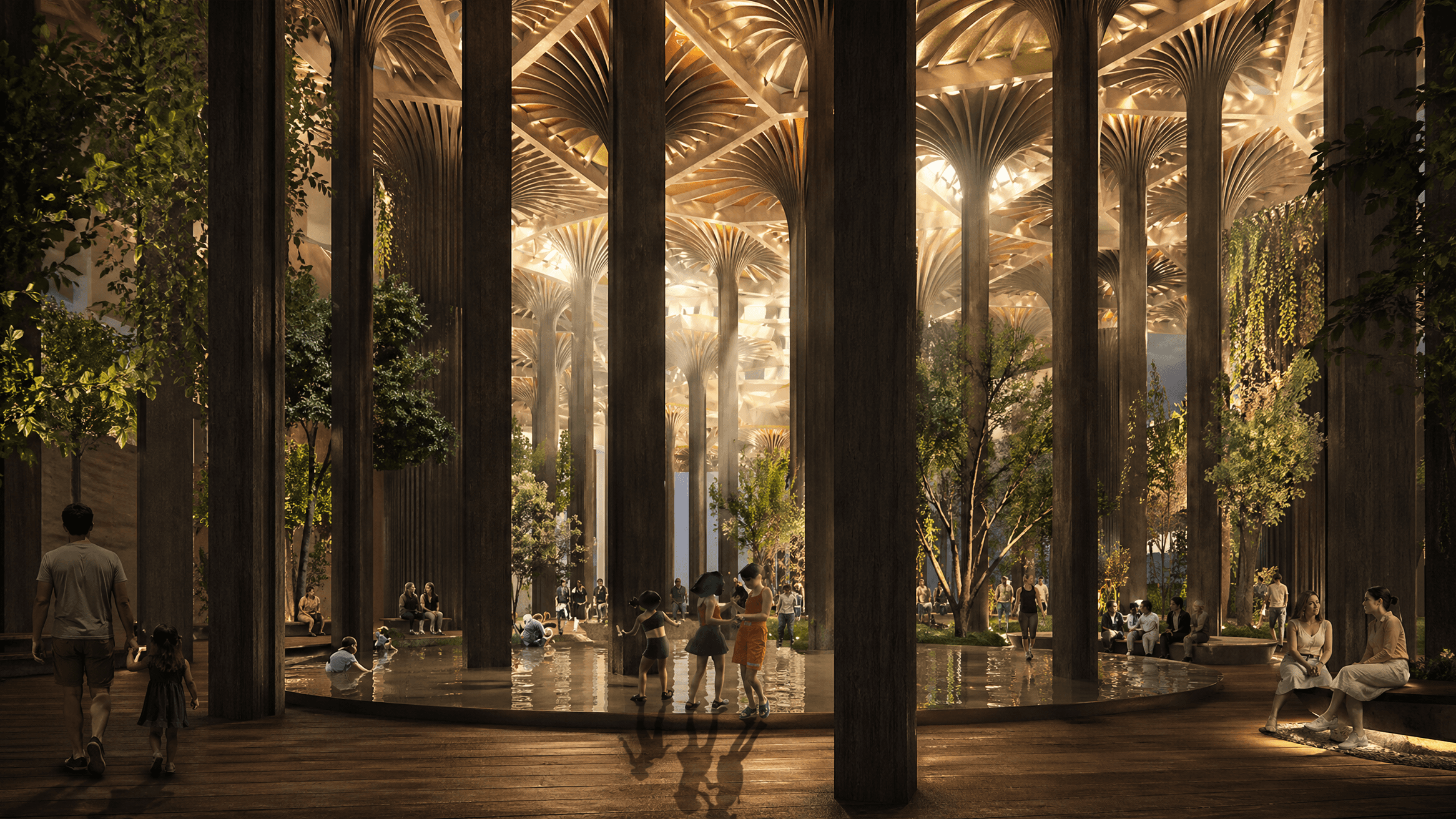
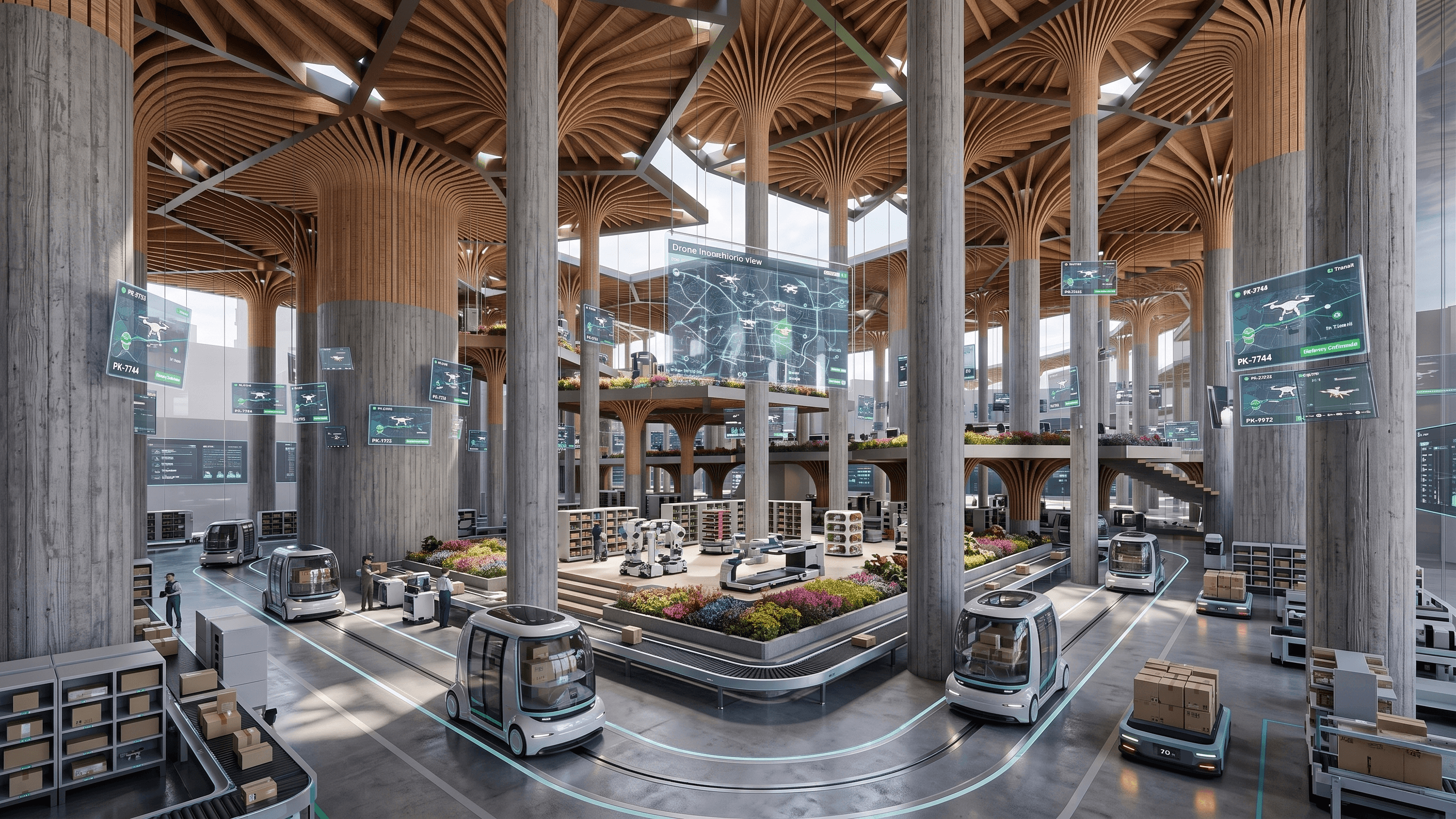
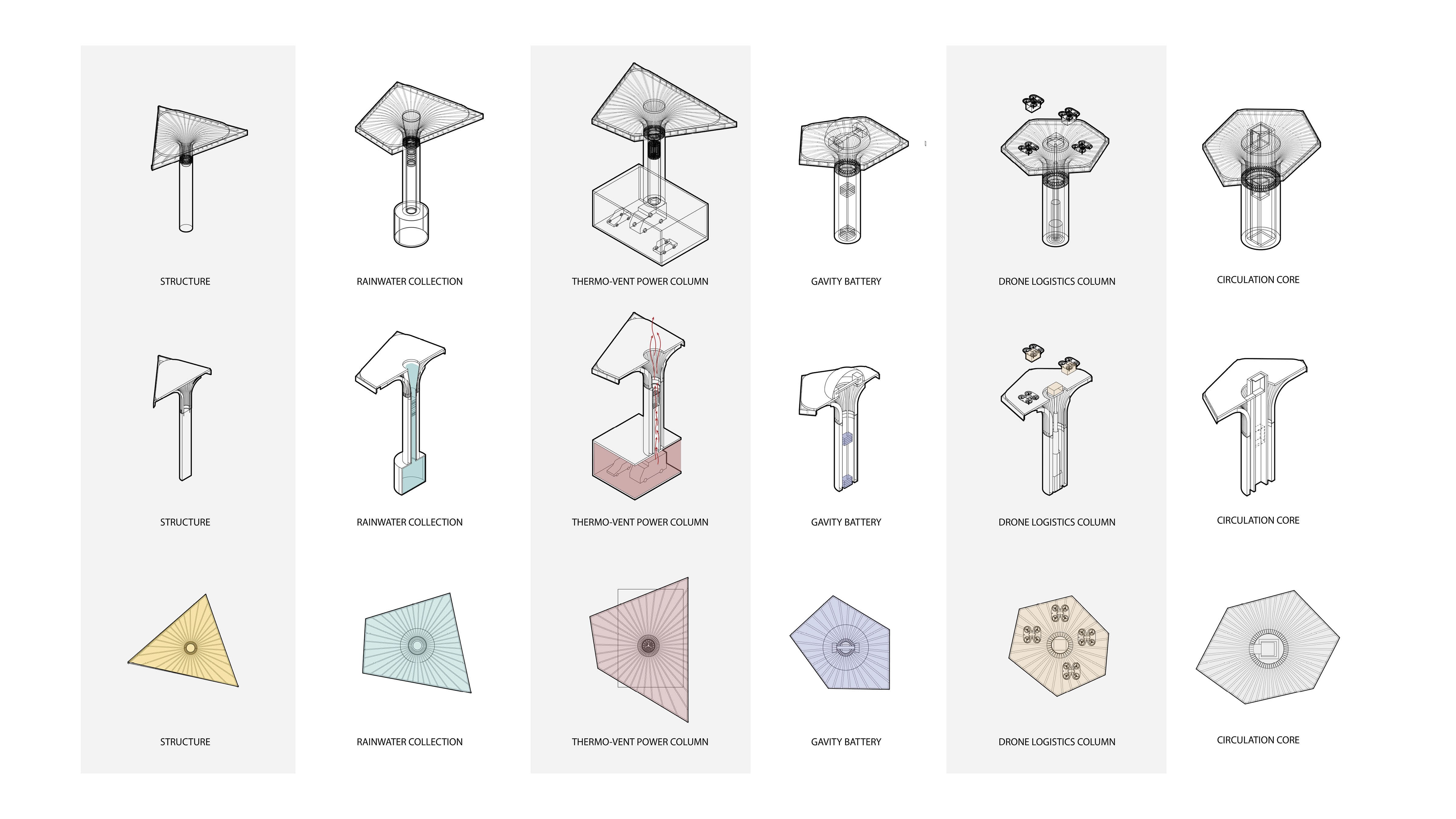
The columns of the project are far more than load-bearing supports. Built as a hybrid timber–concrete system — concrete trunks, custom slotted steel nodes, and laminated timber branches tied together by a steel perimeter frame — they take on six roles within one branching structural language: standard structural columns, rainwater collection columns, thermo-vent power columns that draw heat and rising air from the tunnel below, gravity-battery columns that store electrical energy through heavy concrete weights, drone-logistics columns that move packages between street and platform, and vertical circulation cores. Color operates both as a landscape index and as a way to identify each column's role within the larger ecological and infrastructural system.