INTERACTIVE SPATIAL INTELLIGENCE

A COLLABORATIVE PLATFORM FOR EMERGENT SPATIAL BEHAVIORS

INTERATIVE & COLLABORATIVE TOOLS

ARCHITECTURAL DESIGN & SYSTEM

ARCHITECTURAL DESIGN & SYSTEM

GENERATIVE SPATIAL STRATEGIES

GENERATIVE SPATIAL STRATEGIES

Institution

Location

New York, NY

Date

2025

Original Exhibition Team

Original Exhibition Credits

Post-Exhibition Development

Acknowledgments

Emergent Spatial Intelligence Through Simple Rules

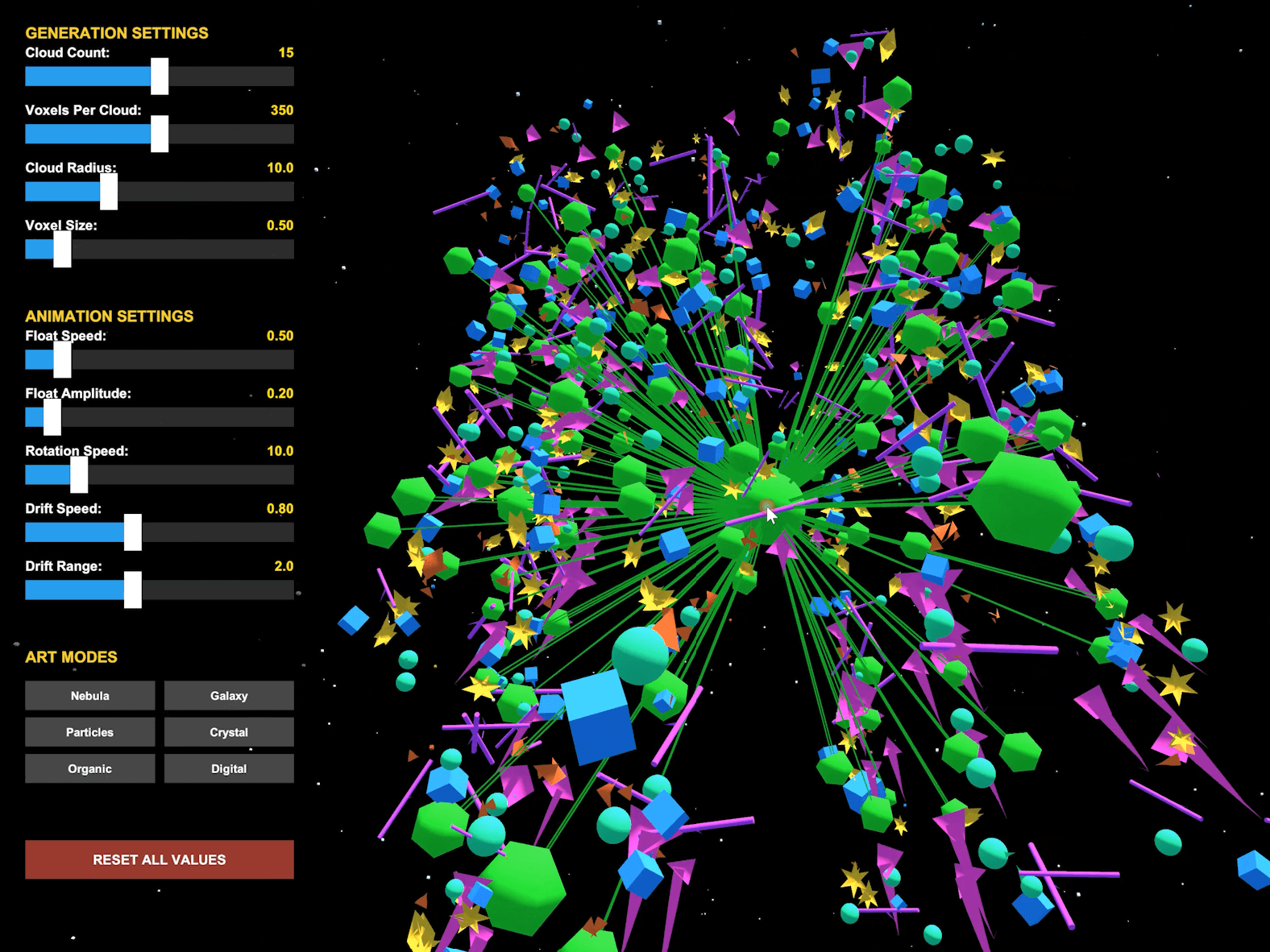
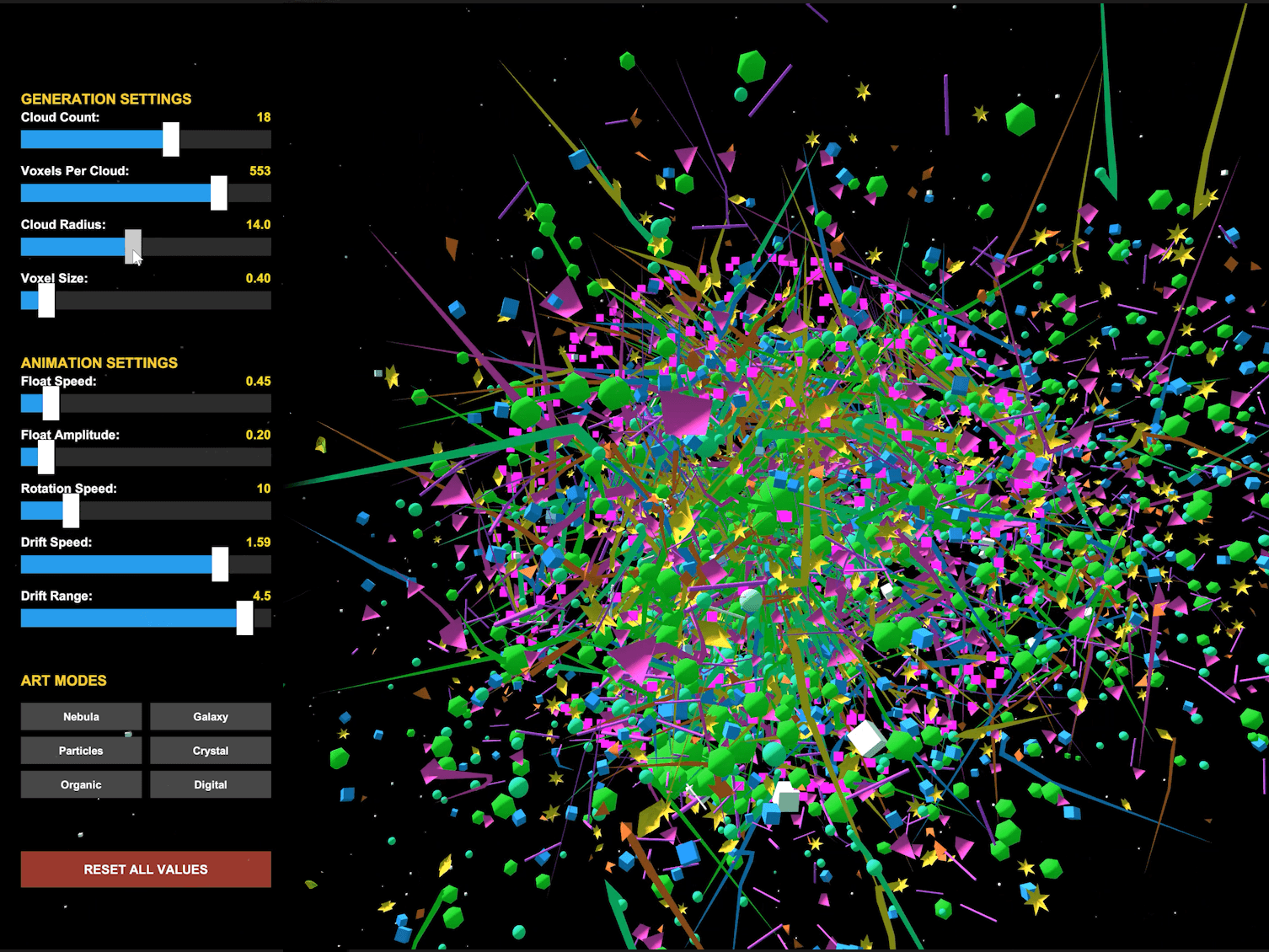
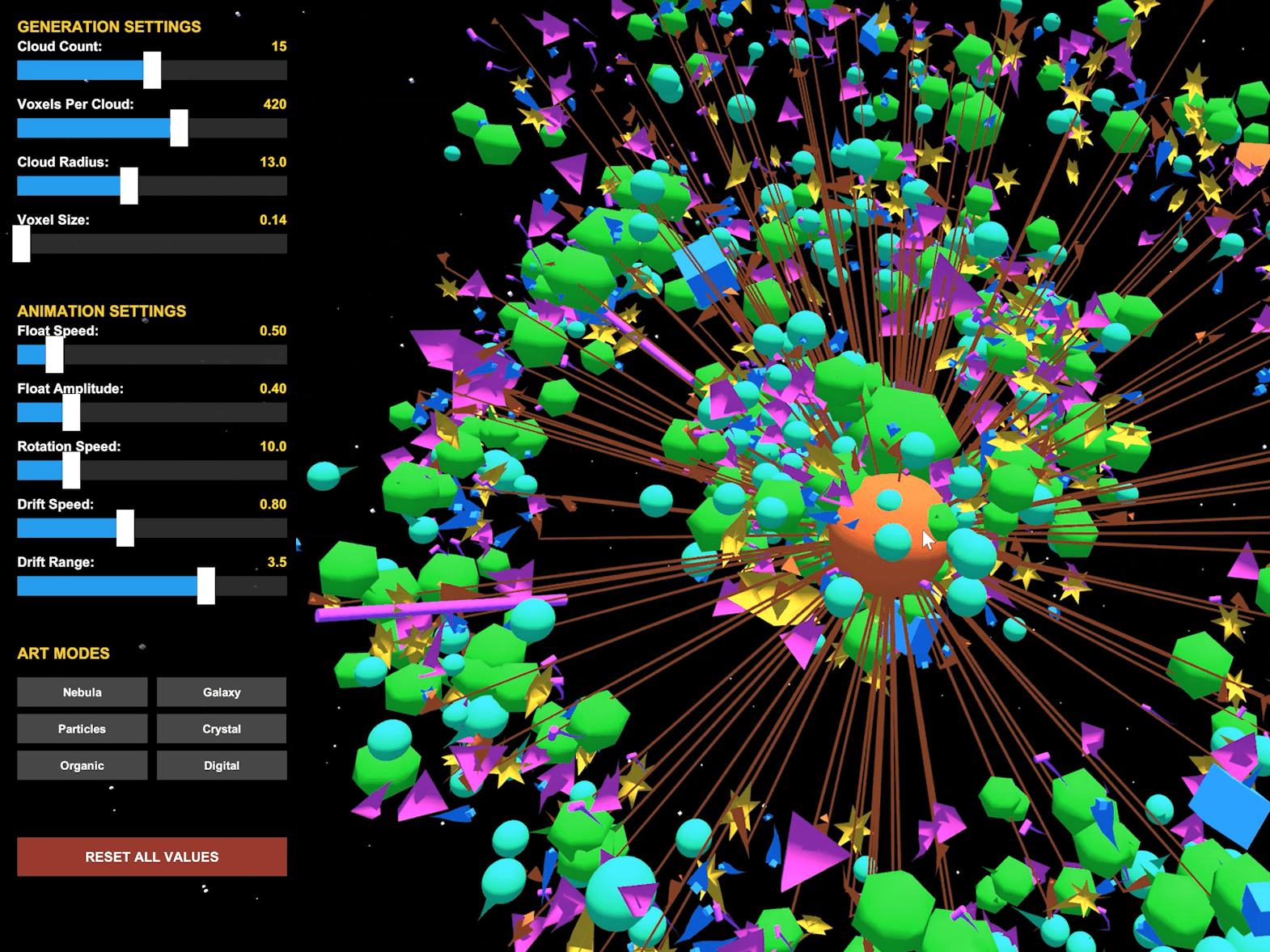
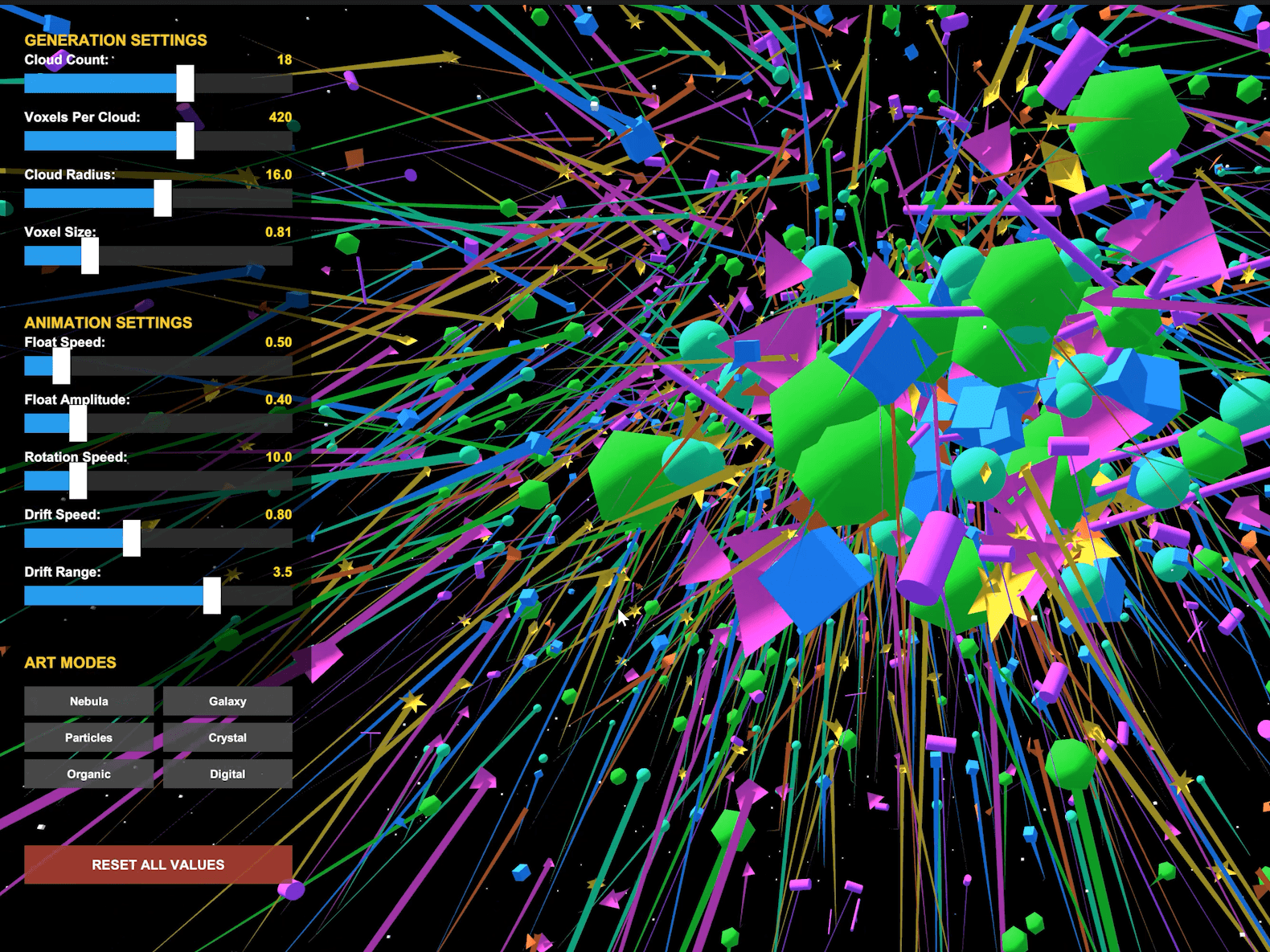
This interactive Unity platform investigates how simple rules, user input, and real-time feedback can generate complex spatial behavior. The system is built from seven geometric agents, each with distinct movement tendencies and response patterns. A single click activates local interactions, while repeated actions produce larger emergent formations. Rather than prescribing fixed outcomes, the project shows how adaptive spatial systems can grow from small behavioral differences and collective participation.


Behavioral Languages Through Color and Movement

Color functions here as both atmosphere and instruction. Each hue is linked to a behavioral logic, shaping how elements move, react, and influence one another. Blue drifts softly, yellow expands with energy, and green leaves directional traces across the field. These relationships make spatial behavior legible and intuitive, allowing users to compose environments through recognizable emotional cues. The project explores how responsive space might communicate through movement rather than static form alone.

Collaborative Design Through Multi-Selection and Evolution

The platform is designed for shared authorship rather than individual control. Multiple users can select agents at the same time, producing overlapping signals, coordinated reactions, and collective transformations. When preferences align, the system generates unified spatial rhythms. When they differ, it produces layered and negotiated outcomes. This interaction model turns spatial design into a live process of participation, showing how digital environments can register, balance, and visualize multiple viewpoints in real time.
Location

New York, NY

Date

2025

Team

Yunhao Zhong (Personal Research and Development)

Networked Behaviors Through Chain Reactions

Each agent responds not only to direct input but also to nearby activity, creating ripple effects across the field. Local actions trigger connection lines, proximity-based reactions, and hybrid responses between unlike elements. As interactions accumulate, the area of influence expands and the system becomes more interconnected. The result is a spatial network where small decisions can have large consequences. The project frames architecture as a responsive ecology of relationships, feedback, and distributed coordination.

Adaptive Architectural Systems with Learning Memory Capabilities

The system records repeated interactions and gradually adjusts its behavior based on use. Preferred colors, recurring combinations, and successful patterns become part of its evolving logic. Over time, influence networks expand and certain actions gain greater spatial effect. This introduces memory as an architectural quality, not just a technical feature. The project suggests how environments might learn from occupation, refine their responses, and become more attuned to the habits and needs of their users.

Morphological Transformation Through Six Spatial Modalities

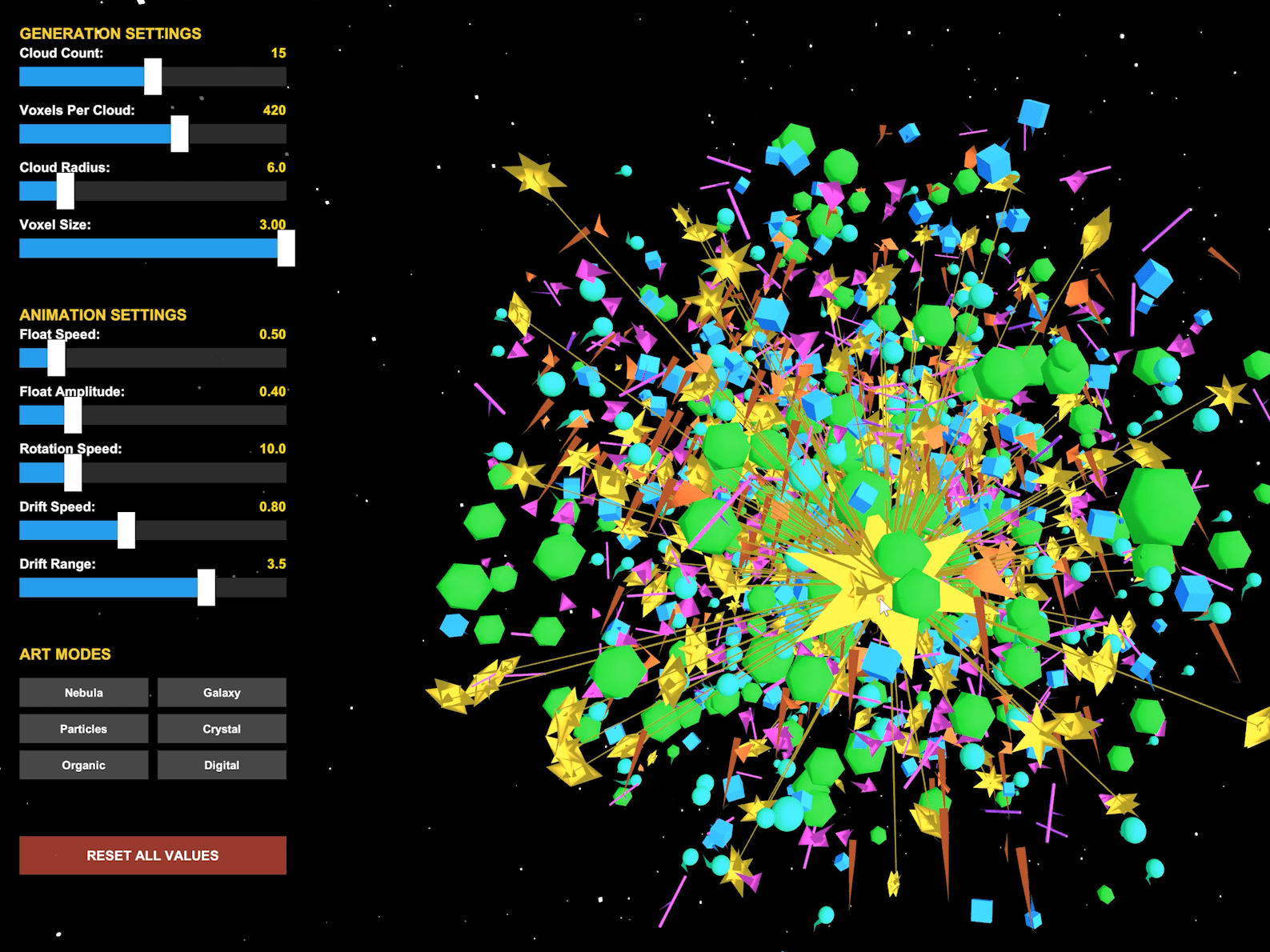
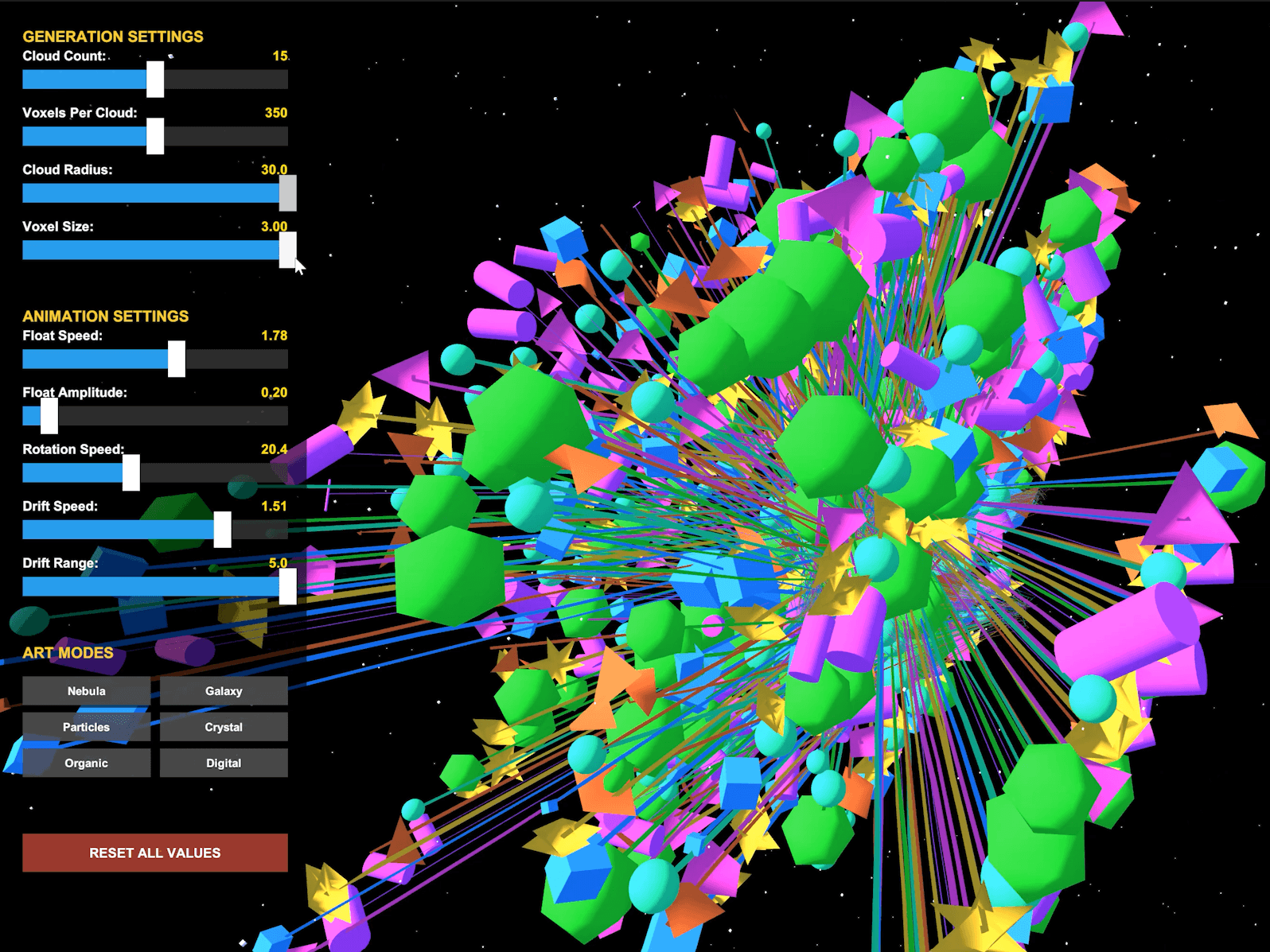
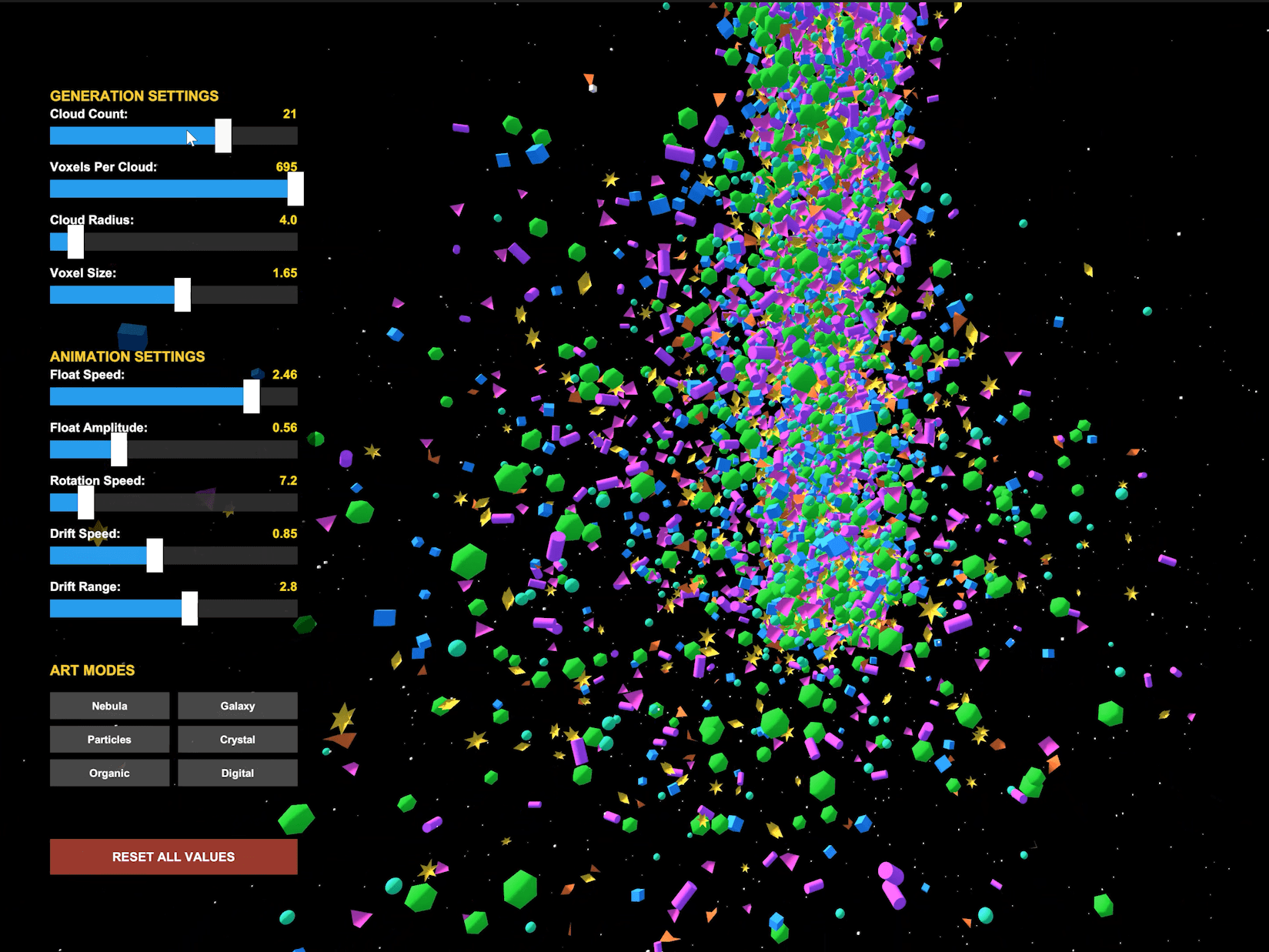
The platform can reorganize itself through six transformation modes, each producing a distinct spatial condition. Nebula creates soft clusters, Galaxy introduces spiraling motion, Particle disperses activity, Crystalline builds vertical emphasis, Organic generates flowing formations, and Digital aligns elements into structured grids. These shifts happen instantly but remain connected to previous interactions. Rather than offering one fixed arrangement, the project proposes architecture as a flexible system that can support different moods, uses, and collective situations.

Generative Architectural Aesthetics Through Algorithmic Beauty

Visual richness emerges from interaction rather than decoration. When agents with different behaviors meet, they form hybrid motions, unexpected rhythms, and temporary spatial compositions that were not individually scripted. Calm elements can gain pulse, energetic ones can become patterned, and simple rules can generate surprising visual effects. This approach treats aesthetics as a product of behavior, relation, and timing. The project suggests a design model where beauty is not applied afterward, but produced through system intelligence itself.

Institution

Date

Location

New York, NY

Critic

Recognition

Adaptive Spatial Typologies Through Behavioral Transformation

The project proposes spatial typologies that are not fixed by program alone, but shaped by interaction, transformation, and collective use. A single environment can shift between quiet, social, focused, or exploratory conditions without losing coherence. This opens a model of architecture that responds to changing activities instead of forcing users into predetermined categories. The work points toward spaces that are more flexible, more inclusive, and better aligned with the rhythms of contemporary life.

Collective Learning Through Networked Spatial Systems

Beyond a single installation, the project suggests how spatial systems might share behavioral knowledge across contexts. Patterns learned in one environment could inform future responses in another, creating a broader ecology of adaptation and exchange. This idea extends intelligence from the scale of an object to the scale of a network. Rather than imagining architecture as static and isolated, the project envisions connected environments that become more responsive through accumulated experience and shared learning.